
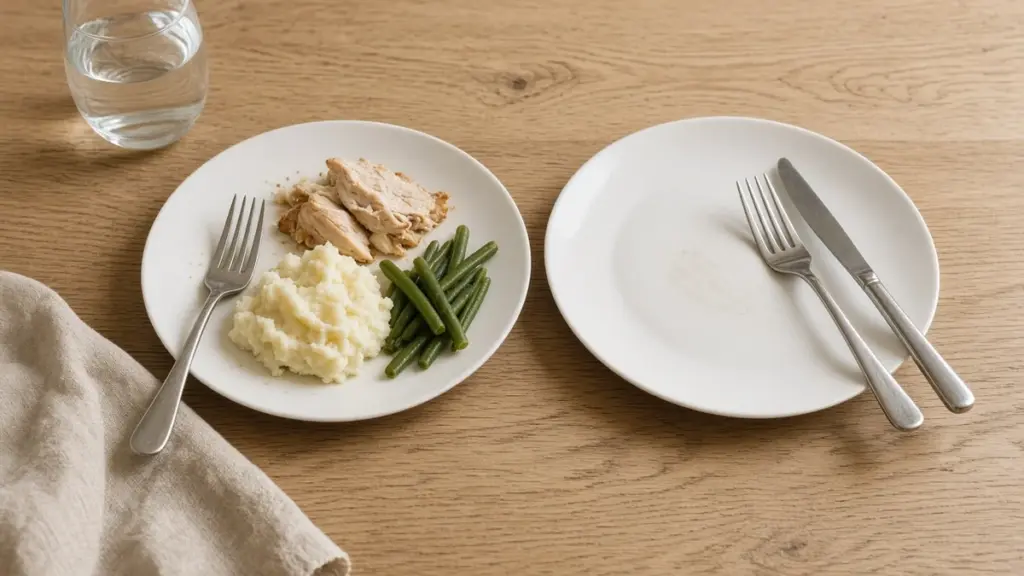
There’s a one-line memo in my phone:
“Leaving food is the same as starting the meal by throwing food away.”
Strong, for a memo. But Thanksgiving is coming, and with it the biggest plates of the year. So let’s talk about it.
Is it rude to leave food on your plate?
The honest answer is: it depends on where you’re sitting.
In Chinese dining etiquette, a little leftover food can show the host was generous. Japan’s tourism organization asks visitors to finish their meal. And in Korea, I grew up hearing “don’t leave any rice.”
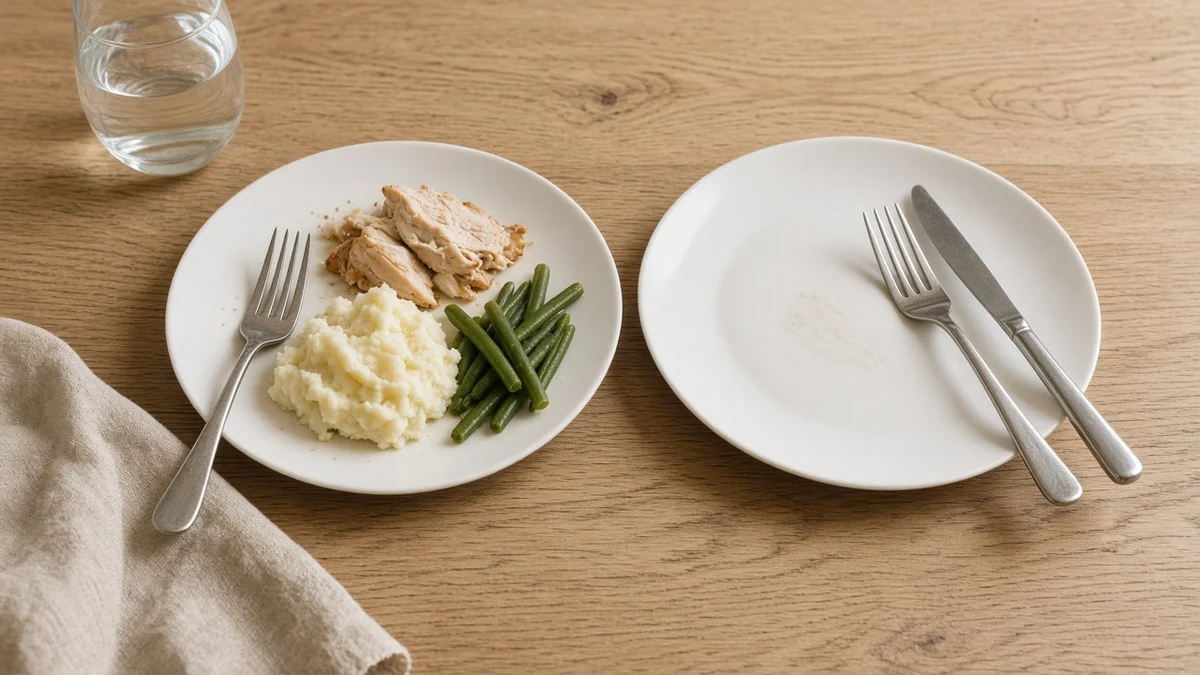
Around the table, around the world
In some places, leaving a little food is the polite move.
The Cultural Atlas, describing Chinese dining etiquette, says: “Guests may leave a small amount of food on their plate at the end of a meal to show that the host has provided generously.” The same source notes this custom is changing, and that public campaigns now encourage people to finish what they order.
In Japan, it’s the other direction. Japan’s national tourism organization gives visitors this advice: “Do try your best to finish all your meal.”
And then a very kind footnote: “Unlike food, it is perfectly acceptable to not finish your drink.”
Good to know. Your half-full glass of tea is safe.
In Korea, I grew up on the other side of that line. “밥 남기지 마라.” Don’t leave any rice. I heard it from my parents. A lot.
These days it’s less about the rule. When I eat, I think about the effort the cook put in, so I try to finish what’s on my plate. And when the food is delicious, finishing it is not exactly a struggle.
And in America
The US has its own history here, and it’s a surprisingly official one.
You may have heard of the “Clean Plate Club.” It sounds like the kind of club you get signed up for without being asked.
According to National Geographic, the Clean Plate Club “owes its existence to World War I.” The US Food Administration, run by Herbert Hoover, pushed Americans to save food for the war effort. The slogan was “Food will win the war.” In the writer Rebecca Rupp’s words, citizens “were urged to sign pledge cards, swearing to forgo waste by adopting the ‘doctrine of the clean plate.'” The phrase was on the posters too. A 1917 Food Administration poster told Americans: “Adopt the doctrine of the clean plate.”
It came back after World War II too, in 1947, under President Truman.
So when an American parent says “finish your plate,” there’s a small chance they’re quoting a government campaign from over a hundred years ago. Without knowing it. Which is kind of beautiful.
How much food are we talking about?
A lot.
The USDA’s Economic Research Service estimated that in 2010, “31 percent, or 133 billion pounds” of the food available at the retail and consumer levels in the US went uneaten. They put the value at about $162 billion.
That’s not all from plates. It includes grocery stores, home fridges, everything. But plates are in there.
And the same report gives a possible reason that sounds very familiar: “oversized portions and the distaste for certain foods among abundant food choices may help contribute to greater plate waste.”
Read that sentence again and picture a Thanksgiving buffet. It’s a little too accurate.
Back to my memo
Here’s what I like about my own memo, if I can say that.
It moves the moment of waste.
We usually think waste happens at the end. You’re full, you push the plate away, the rest goes in the trash. That’s when it feels wasteful.
But the memo says the waste really happened at the beginning. When you put more on the plate than you were going to eat. The food was already headed for the trash. It just took the long way, through the table.
By the time you ask “should I finish this?”, you’ve only got two choices. Eat food you don’t want, or throw it out. Neither feels great.
The better question comes earlier. How much should I take?
What that looks like on Thanksgiving
This is where my memo becomes a small, very practical habit.
Take less the first time. Go back if you want more.
Seconds are allowed. Nobody at a Thanksgiving table has ever been arrested for going back for more mashed potatoes. (I checked. Okay, I didn’t check. But I’m confident.)
And if you’re at someone else’s house, where the rules are different, follow their rules. If the host’s culture says leave a little, leave a little. If it says finish everything, take smaller portions so you can. Either way, you’re being polite.
I’ve sat at Thanksgiving tables here in the US, too. Different country, different food. The question on the plate was the same one I grew up with.
Rude, or wasteful?
Rude? Sometimes yes. Sometimes no. It depends on the table.
But wasteful is a different question. And my answer to that one doesn’t change much from table to table.
If I’m going to leave it, I’d rather not take it.
Sources: The Cultural Atlas, “Chinese Culture: Etiquette”; Japan National Tourism Organization, “Japanese Food Etiquette Guide”; Jean C. Buzby, Hodan F. Wells, Jaspreet Aulakh, “Food Loss—Questions About the Amount and Causes Still Remain”, USDA Economic Research Service, Amber Waves, June 2, 2014; Rebecca Rupp, “Clean Your Plate: Getting a Handle on Food Waste”, National Geographic, March 31, 2015; William Crawford Young, “Sir…Do Your Share,” U.S. Food Administration poster, 1917 (University of Mary Washington Digital Archives; Biblioteca Nacional de Portugal).