
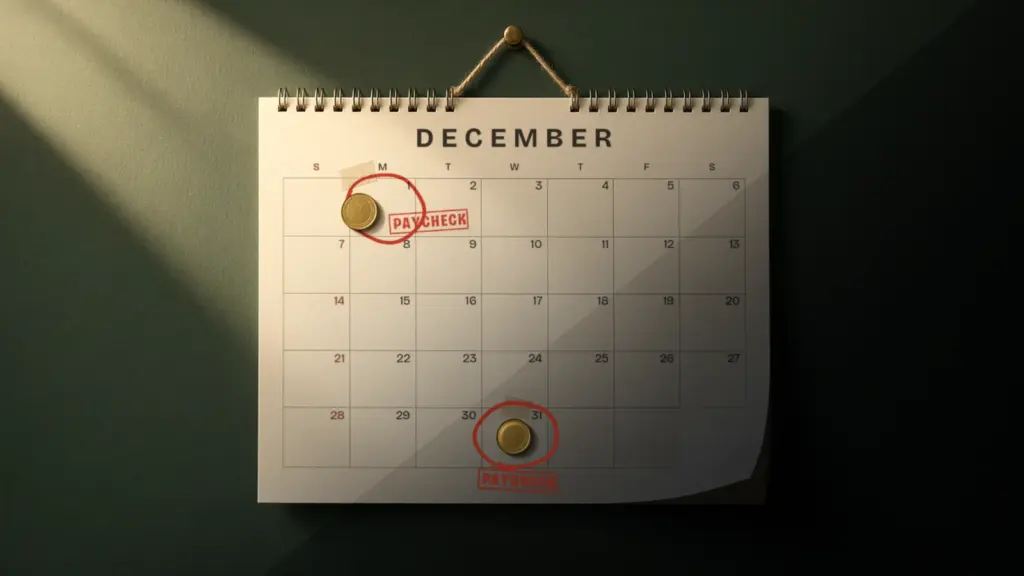
I have a strange superpower.
For about five days after payday, everything looks cheap.
For about five days before payday, the exact same things look expensive.
Same price tag. Same item. Same me. The only thing that moved was the calendar.
Prices are printed, so they should be fixed. My eyes clearly did not get that memo.
Short answer: Money doesn’t have a fixed weight. The same amount can feel like gum to one person and gold to another, depending on how much they have and what that money means to them right now. I call it a relative estimate: I judge money by how heavy it is for the person holding it, not by the number.
Why does the same money feel different?
Here’s what my payday eyes taught me. The number on a tag is just a number. The weight is something I add.
Right after payday, my wallet feels full, so each dollar feels light. A few days before payday, the wallet feels thin, so each dollar gets heavy. Nothing about the dollar changed. What changed was how much of me it was carrying.
If the weight of money can swing that much for one person inside one month, think about the gap between two different people.
That’s where the title comes from. The same amount can be gum to you and gold to someone else.
A hundred dollars is easy for one person and hard for another. The more someone earns, the lighter each dollar feels to them. For one person, a hundred dollars barely registers. For someone else, it’s a decision they think about twice.
The number is the same. The weight isn’t.
I once wrote about the dumbest way to make money, which is caring only about the amount. This post is the other half. Not how to make money, but how to weigh it.
Why did a little money feel huge when I was a student?
When I was a student, money that could cover one meal was huge money.
Not nice-to-have money. Huge money.
The number itself was small. That was the whole point. Small number, heavy weight.
Back then, that money wasn’t a snack or a treat. It was a meal. It meant I was taken care of for that part of the day.
Today, the same amount wouldn’t feel the same to me. But I haven’t forgotten how heavy it used to be. I think that memory is the scale I still use.

What is a relative estimate?
An estimate is usually a number someone gives you after looking at a job. I like to flip it. Look at the number, then estimate the weight.
Here’s the idea in one line. Two amounts are worth the same when they weigh the same in each person’s situation, not when the numbers match. The amount isn’t the point.
This changes how I see a lot of small things.
A gift. A small gift from someone who doesn’t have much can weigh more than a big one from someone who has plenty.
A tip. A tip from someone a few days before payday is not the same tip as one from someone who just got paid. Even if the number is identical.
A favor. Favors have weight too. An hour from someone with no spare hours is heavier than a whole day from someone with plenty of them.
So when I look at what someone gave, the number is the least interesting part. The better question is what it cost them to let it go.
I’m not saying amounts don’t matter. Bills don’t care how heavy a dollar feels. But when I’m judging a person, and not a bill, I want to use the right scale.
The scale I keep
My payday eyes still play tricks on me. Some weeks a price looks like nothing, and some weeks the same price looks like a mountain.
But they taught me something I’m glad to know. Every amount has two numbers: the one on the tag, and the one it weighs.
So now, before I judge what someone gave, I try to ask what it weighed.