
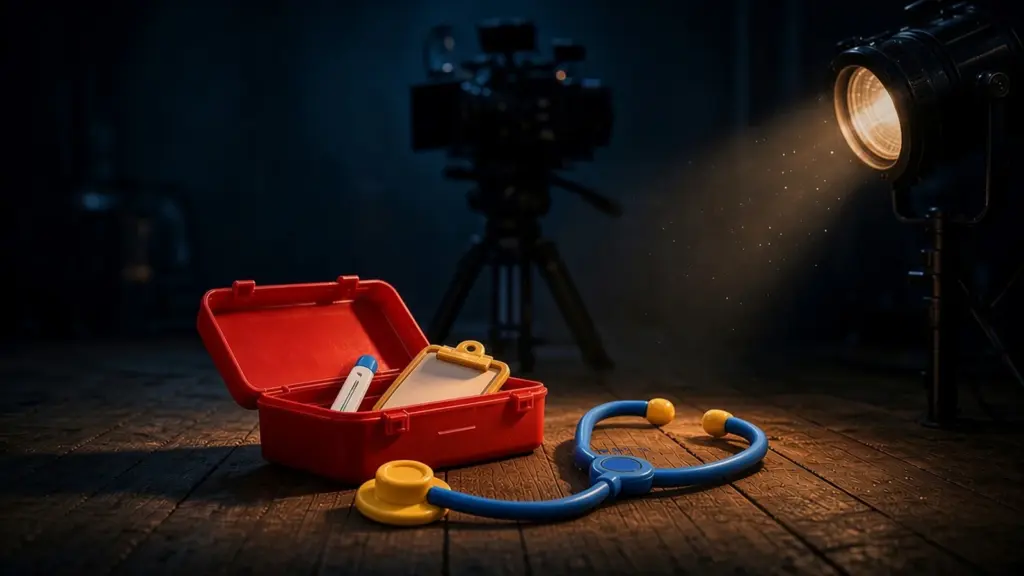
English has a funny little word. Play.
Kids play. Actors play a role. And the thing actors put on in a theater? That’s called a play.
Same word, three jobs. I don’t think that’s an accident.
Short answer: Actors “play” a role because, to me, acting is the same game kids play when they pretend: you decide something is real, and then you believe it. English has used “play” for acting on a stage since the late 1300s. The best actors I’ve seen, even with a camera, lights and a whole crew around them, still look like they’re playing.
Where does the word “play” come from?
I’ll keep this light.
According to Etymonline, the Old English verb plegan already covered things like “amuse oneself” and “engage in children’s play.” By the late 1300s, “play” also meant “perform or act on the stage,” “take the role of,” and “make a pretense of, make believe.” The noun “play” as a dramatic performance shows up even earlier, by the early 1300s.
So the kids’ game and the actor’s job have been sharing one word for more than 600 years. Nobody had to invent a new verb for actors. English just looked at what they were doing and said, oh, that’s playing.
Notice the opposite, too. Etymonline says “play” has been set against “work” since the late 1300s. Actors get paid to do the one thing the dictionary says isn’t work.
What is sokkumnori?
Korean has its own word for this kind of game: 소꿉놀이, sokkumnori. Kids set out toy dishes and little tools and pretend to keep house. There’s no script. There’s no audience. And nobody stops in the middle to say the soup isn’t real.
If you grew up speaking English, the closest thing is probably playing house, or just playing pretend. Korean Wikipedia even gives the English for sokkumnori as playing house, or play grown up. Different toys, same rule: once the game starts, it’s real.
The way I see it, acting is that same game, all grown up.
Did I play pretend as a kid?
Oh, yes. When I was a kid, I played pretend hospital a lot. In Korean it’s 병원놀이, “hospital play.”
There was a doctor and there was a patient. I was the doctor, my friend was the patient, and then we switched.
No costume, no set, no lines to memorize. And still, while we were in it, it felt real.
What does great acting look like to me?
I write about movies as a viewer, like in my Green Book review. So here’s a viewer’s answer.
Brad Pitt in Fight Club. That was truly great acting.
If you somehow haven’t seen it, it’s David Fincher’s 1999 movie, and Pitt plays Tyler Durden. I won’t spoil anything.
To me, he didn’t look like he was working. He looked like he was completely inside the game.
The scene I’d pick is the one where Tyler looks straight into the camera and says:
“You are not your job. You’re not how much money you have in the bank.”
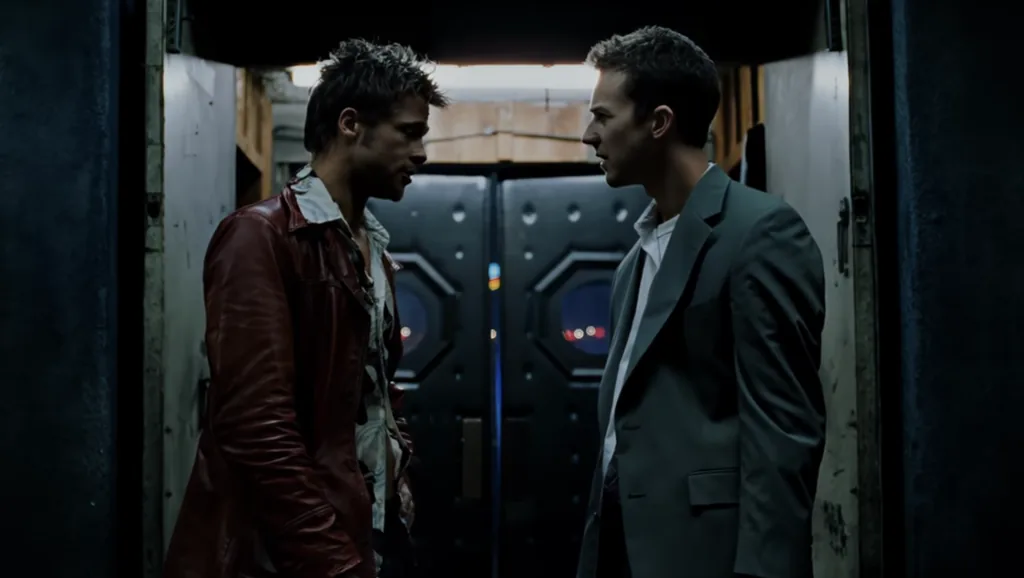
It’s just a man talking to a camera, really. But Pitt believes every word, so we believe him too.
What is it like on the other side of the camera?
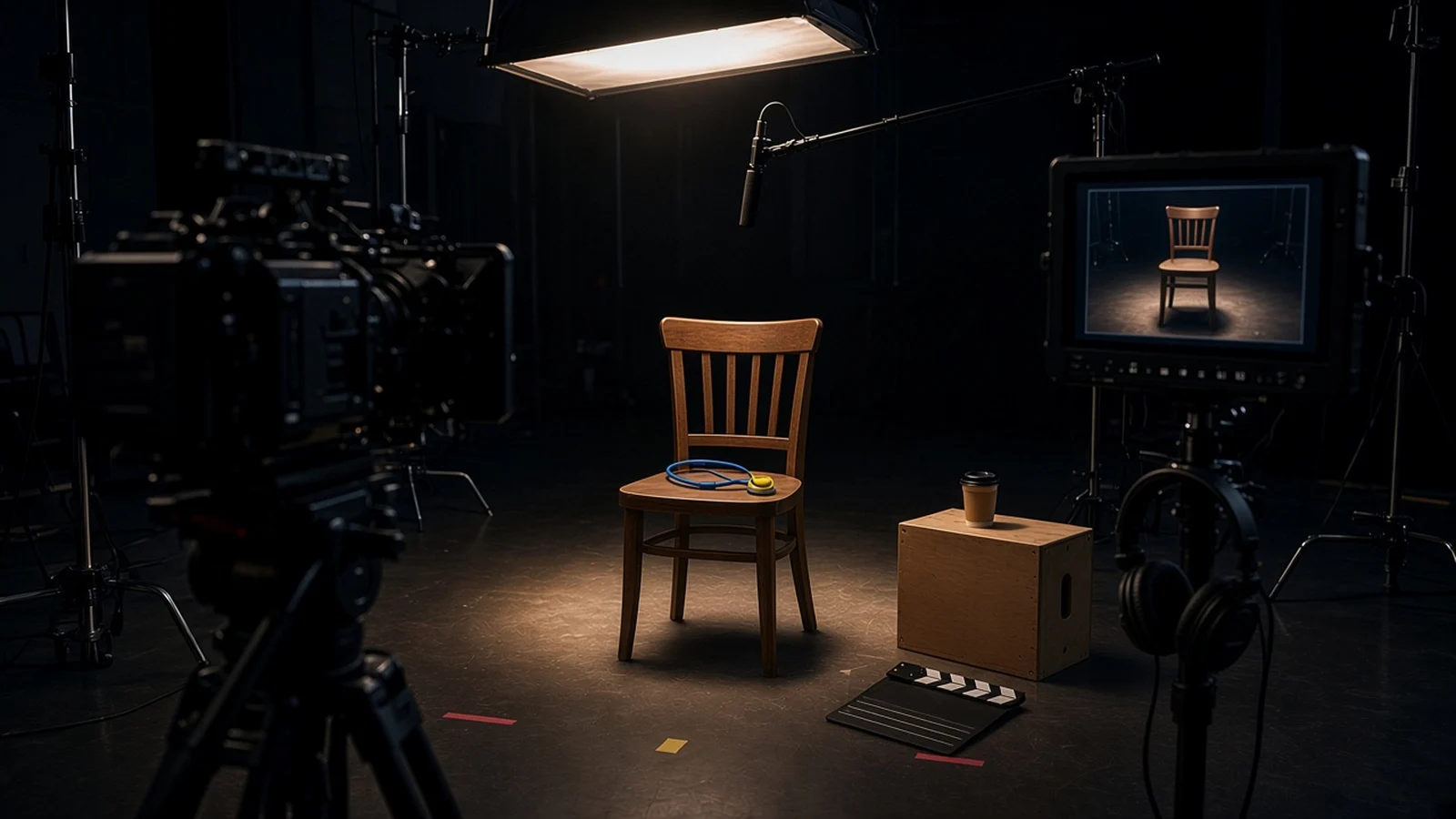
I’ve spent a lot of time behind a video camera. So I know what a set looks like from that side.
There’s the camera, right there. There are the lights. There’s the crew, all around, watching.
And in the middle of all that, some actors just act naturally. Like none of it is there. I always thought those actors were amazing.
A kid playing pretend hospital has nobody watching. An actor has to find that same feeling with a whole crew watching.
Is acting just pretend play?
I’m not the first to think this. Years ago, I remember the Korean actor Son Suk-ku saying something like it in an interview: that acting is an extension of sokkumnori. I couldn’t find that exact line again, so I won’t put words in his mouth.
But I did find this. In a 2024 interview with Esquire Korea, he talked about filming with the veteran actress Kim Hye-ja. He said acting built on calculated blocking, timing and expressions could never match hers. He said she acted “like a baby,” and that he went to set thinking, “Today, too, I’m going to go play with her.” After that, he said, he simply followed her lead and reacted.
Go play. That’s how a professional actor described going to work with her.
The classic acting textbook says much the same thing, in a more serious voice. Konstantin Stanislavski’s An Actor Prepares, first published in English in 1936 in Elizabeth Reynolds Hapgood’s translation (in Korean, 배우 수업), introduced what’s called the “magic if.” As the BBC’s drama guide explains it, the actor asks, “What would I do if I was in this situation?”
That little “if” is the whole engine of pretend hospital. If I’m the doctor, then you’re the patient, and now we’re in.
Why does good acting look natural?
I don’t think it’s hiding the work. I think it’s remembering the game.
The camera, the lights, the crew. Grown-ups put all of that around one person and say, okay, now pretend. The ones who can still do it are the ones who never forgot how.
When I was a kid, the hospital was made of nothing, and I believed in it anyway.
Good acting looks like someone who never stopped playing.