
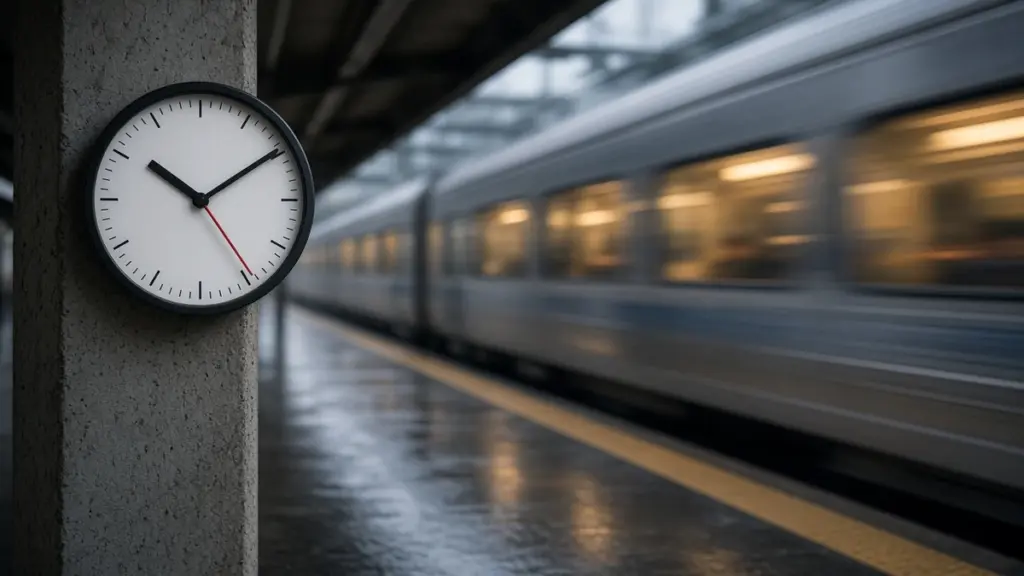
Two memos.
The first is short: “Why do we say time goes? Let’s say it comes.”
The second is long, and kind of a run-on. It says that when someone does a small thing really well, crowds can cheer, and they can become a hero. Or a beggar. And that the time you spend focused and the time you don’t can flow at different speeds. Everyone’s time can be different.
So: one memo about grammar, one about relativity. Past me had a big week.
Time “goes”
In Korean, we say 시간이 간다. Time goes.
In English, time flies. Time passes. Time runs out.
Even Latin had it. “Tempus fugit,” time flies, comes from Virgil’s Georgics, a poem from over 2,000 years ago. The full line is “fugit irreparabile tempus,” roughly “irretrievable time flies.”
So humans have been complaining about time leaving for a long time. Time has never once been described as staying for dinner.
What if it comes?
My memo suggests flipping it. Time doesn’t go. Time comes.
I like how that feels. “Time is going” sounds like loss. Every minute is a minute leaving.
“Time is coming” sounds like delivery. Every minute is a minute arriving. Another one. And another one.
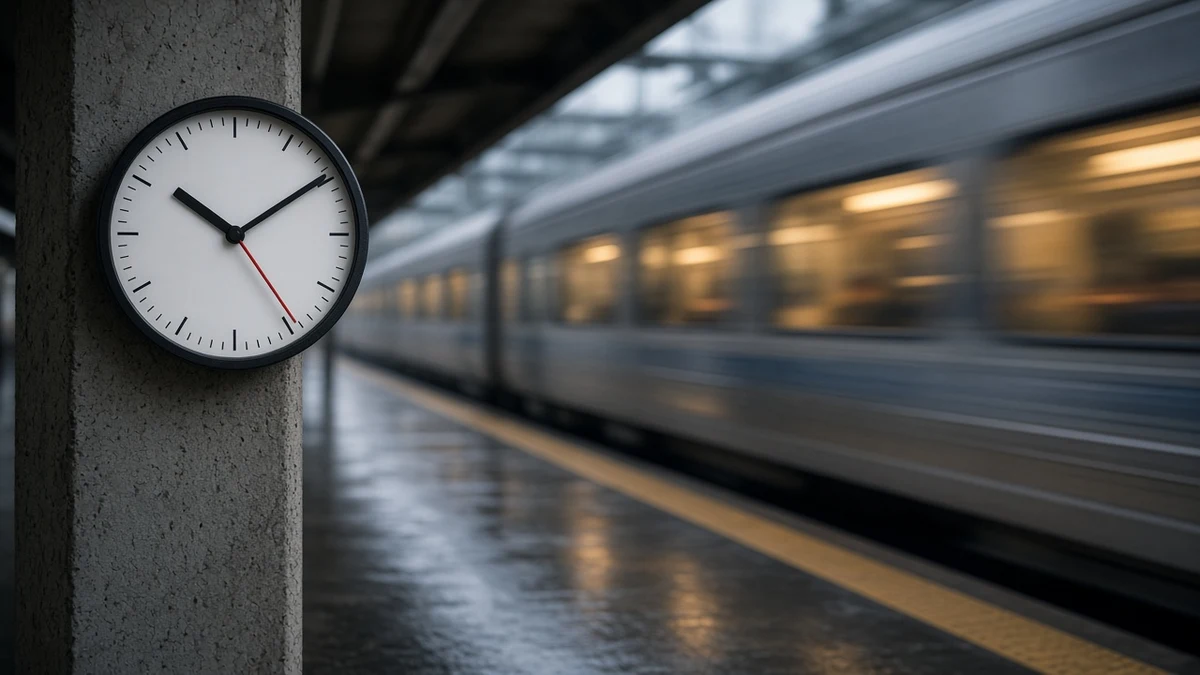
Like a commuter train. It doesn’t fly away. It pulls into the station, again and again, on schedule. You can get on or not. But it keeps showing up.
Why some hours feel short
My second memo said focused time and unfocused time flow differently. That turns out to be something people study.
Claudia Hammond, a psychology writer and BBC presenter, wrote a piece for BBC Radio 4 on this. Her point is that the same amount of time can feel long or short depending on what you’re doing. Twenty minutes for lunch with a friend whizzes by. Twenty minutes waiting for a train feels very different.
She says we judge time in two ways. One is how fast it feels while it’s happening. The other is looking back on it later. When we look back, she explains, we partly judge by how many new memories we made.
So a busy, new kind of weekend can feel fast while it’s happening, and long when you remember it. A weekend of the same old routine might feel the opposite.
She also notes, from research, that time tends to feel slower when we’re bored or watching the clock. “As soon as we focus on time itself, it moves more slowly,” she writes.
So my memo had something. Focus changes the speed. Not on the clock. Inside us.
Everyone’s time is different
The last line of my memo is the one I keep coming back to. “Each person’s time can be different.”
The clock is the same for everyone. Sixty minutes, every hour, in Seattle or in Seoul.
But what happens inside those sixty minutes is personal. One person has the best hour of their year. Another person waits for a train.
For me, the fast hours are the ones where I forget time exists. Drawing, reading, working out. Anything fun enough that I stop checking. I look up and the afternoon is gone.
The slow hours are just as easy to remember. An hour with someone I’m not comfortable around. Or, as a kid, standing still as punishment after doing something wrong. Those minutes were enormous. Some of them are probably still going.
What the slow ones had in common: I was staring at the clock, wishing it would hurry up. Which is pretty much what Hammond said. The more you watch time, the slower it moves.
The hero-or-beggar part of the memo fits here too. Someone does one small thing very well, at the right moment, and people go wild. Somebody else does the same thing at the wrong moment, and nobody notices.
It’s the same action. The time around it was different.
Go or come
Honestly, both words are just ways of talking. Time doesn’t do anything. We do.
But the memo’s way is the one I’d pick.
The next hour is coming. It’ll be here soon. It’s already pulling in.
Sources: “Tempus fugit” (Virgil, Georgics, Book 3, line 284); Claudia Hammond, “How to speed up or slow down time”, BBC Radio 4, All in the Mind.
Pingback: Is Film Dying? Why You Should Develop a Roll of Film Now
Pingback: Your Feed Will Outlive You - Sky is Good (Mostly)