
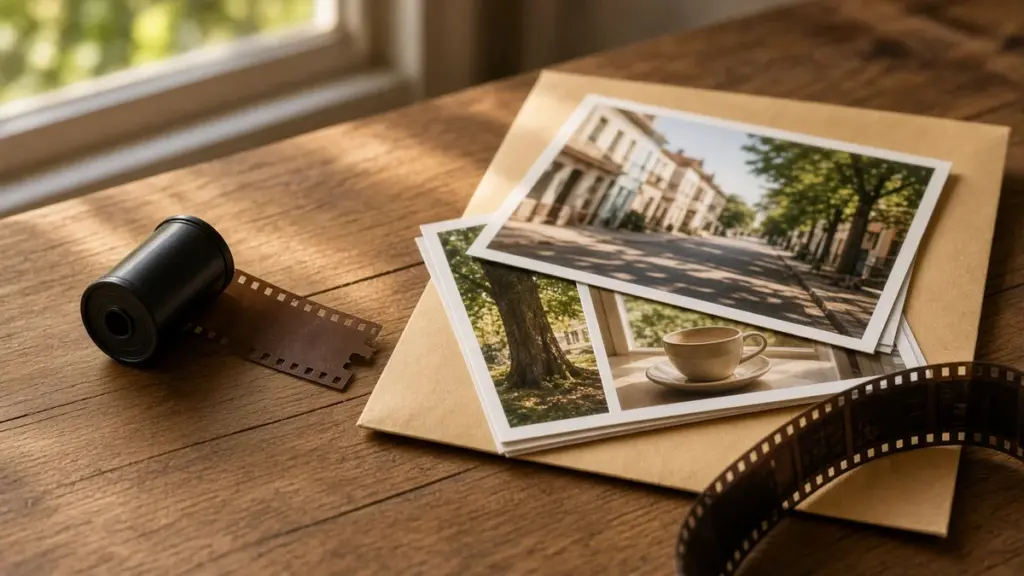
My memo, all in one breath, no spaces, the way I wrote it:
“Experience analog things quickly. Before they disappear. (Photo developing)”
I wrote “quickly.” About film. Which is the slowest kind of photo there is. You shoot, you wait, you wait some more.
I think that’s what past me was worried about. That the waiting itself would disappear.
Short answer: parts of film did die. Kodachrome’s last processing ended in 2010. But film as a whole is still made and sold. What’s getting rare is the ordinary errand of developing a roll.
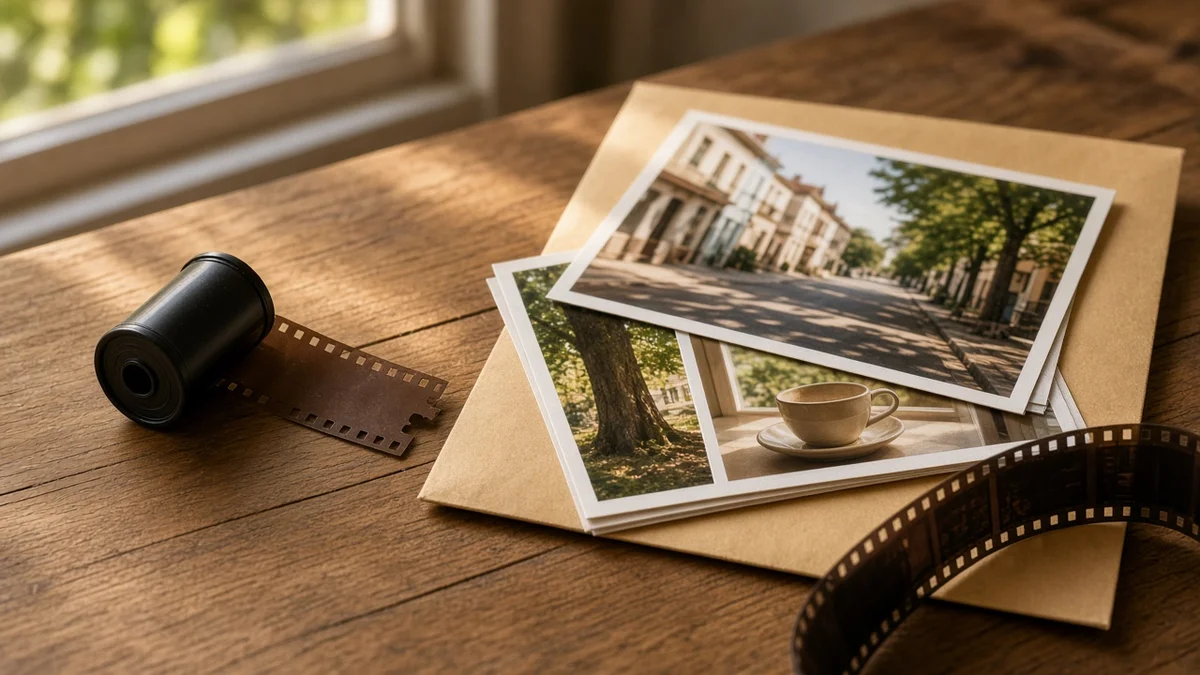
I first used a film camera when I started college, in a photography class. These days I’ve switched completely to digital. So I’m not writing this as a film loyalist. Just someone who remembers how it used to work.
The day a film actually ended
Film has already lost some members of its family. The most famous is probably Kodachrome.
Kodachrome was created in 1935. The Times called it “the first successful color film.” It was demanding to shoot and demanding to process. At its peak, about 25 labs worldwide could develop it.
Kodak stopped making it in 2009, and then stopped making the chemicals to develop it. By the end, one lab in the world was still processing it: Dwayne’s Photo, in Parsons, Kansas.
The New York Times covered the last days at the end of 2010. Rolls arrived from six continents. One railroad worker, the Times reported, drove up from Arkansas to pick up 1,580 rolls he had paid $15,798 to develop.
I read that number twice. That’s not a hobby. That’s a rescue mission.
Todd Gustavson, a curator at the George Eastman House museum, told the Times: “It’s more than a film, it’s a pop culture icon.”
The last processing machine was scheduled to be shut down and sold for scrap. For the last frame, the plan was a photo of the employees in shirts that ended with “Kodachrome: 1935-2010.”
That’s a strange kind of ending. The film still existed in freezers and closets. The way to see it, as intended, didn’t.
Film overall
Here’s where the story gets more complicated than my memo.
In January 2012, Eastman Kodak filed for Chapter 11 bankruptcy protection. That sounded like the end of everything.
But film itself didn’t end. According to The Verge, Kodak more than doubled its still film production between 2015 and 2019, citing reporting by Kosmo Foto. In November 2024, Kodak paused film production to modernize its factory in Rochester, New York, to help keep up with increased demand.
Kodak’s CEO, Jim Continenza, had a line in that story I liked: “Film is made in the dark.”
In August 2025, Kodak warned investors of “substantial doubt” about its ability to continue as a going concern. CBS News reported that this was about debt. It wasn’t an announcement that film was ending.
So the honest answer to “is film dying?” is: parts of it died. Kodachrome is gone. Some labs are gone. But film as a whole is still here, and people are still buying it.
Why the memo still holds
Even if film doesn’t disappear, the experience of it can get rare.
There was a time when developing photos was an ordinary errand. You dropped off a roll, came back later, and opened an envelope.
My own memory skips the errand part. In that photography class, nobody dropped anything off. We developed our film by hand, in a darkroom.
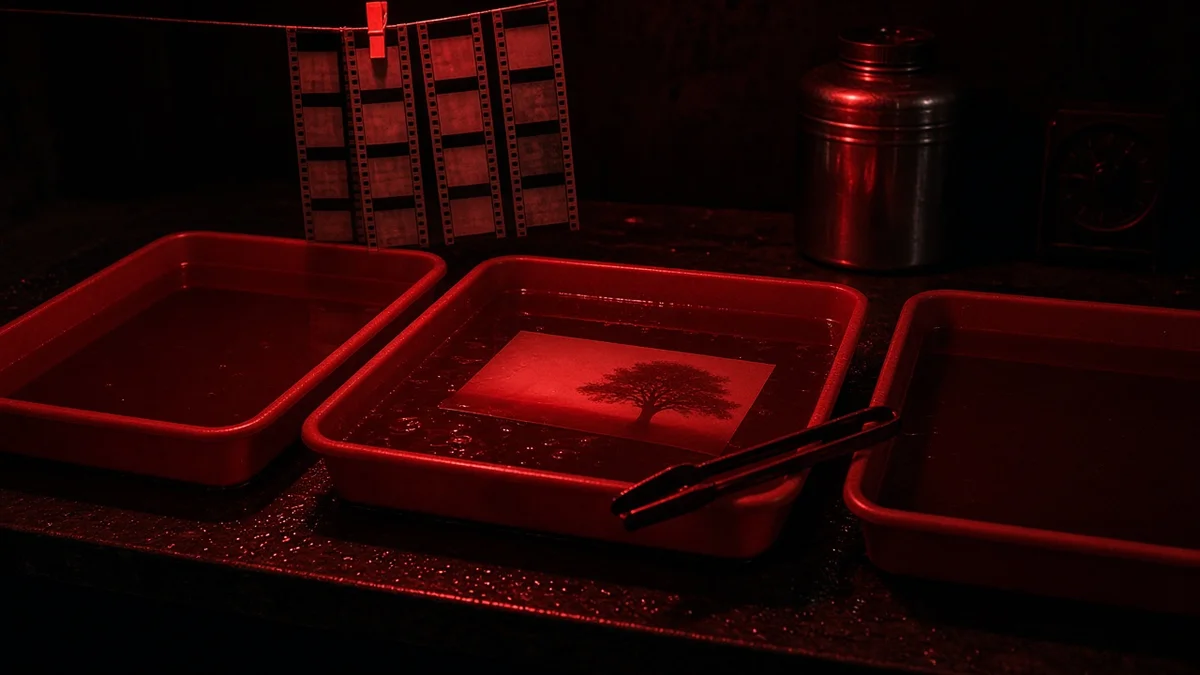
Now it’s a specialty. You have to look for a lab. You might mail your film somewhere.
That’s what “before it’s gone” means to me. The thing might survive. The ordinary-ness of it might not.
The waiting is the point
A phone gives you the photo instantly. You see it, you fix it, you take ten more.
Film doesn’t let you check. You take one picture, and you trust it. Then you wait.
When the prints come back, you’ve half forgotten what you shot. So it’s a little like getting mail from yourself.
Some of the shots will be blurry. One will have your thumb in it. One will be perfect, and you won’t know why.
If you want to try
Buy one roll. Use a simple camera, borrowed or secondhand. Shoot it slowly, over a week or a month.
Find a lab near you, or one that takes film by mail.
Then wait.
The envelope comes back. Inside are 24 or 36 small rectangles, and you see them for the first time.
Sources: A. G. Sulzberger, “For Kodachrome Fans, Road Ends at Photo Lab in Kansas,” The New York Times (Dec 29, 2010, archived); Eastman Kodak press release on its Chapter 11 filing (Jan 19, 2012); BBC News, “Eastman Kodak files for bankruptcy protection” (Jan 19, 2012); The Verge on Kodak pausing film production to upgrade its Rochester factory (Nov 28, 2024); CBS News on Kodak’s going-concern warning (Aug 2025).
Pingback: Looking Back on the Six Months I Drew My Way Into Art School – Sky is Good (Mostly)
Pingback: Your Feed Will Outlive You - Sky is Good (Mostly)