
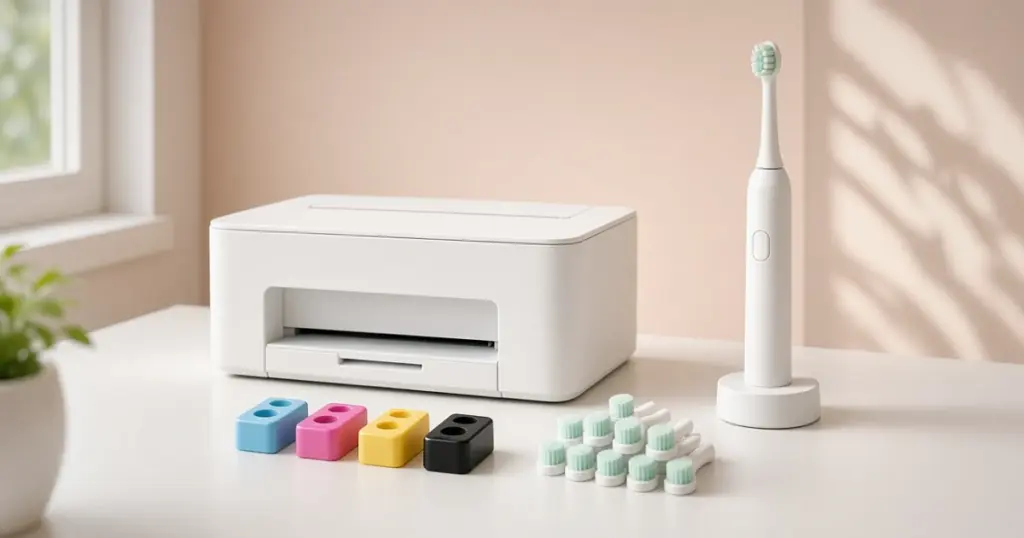
I bought a printer once. I’ve been paying for it ever since.
The ink costs too much, and I keep buying it anyway. Same with my electric toothbrush. I bought the handle one time. The brush heads? I buy those again and again, and swap them in.
And then there’s my truck.
Short answer: Lots of companies don’t make their real money on the first sale. They sell you the thing, then keep selling what it does: ink for the printer, heads for the toothbrush, software for the car. People call it the “razor and blades” model. As a customer, I like paying once. If I’m the one selling, I want the second sale.
What is the razor and blades model?
The classic story goes like this. Sell the razor cheap, or even give it away. Then sell the blades at a nice price, forever. The razor gets you in the door. The blades pay the rent.
The funny part is that the company famous for it may not have started that way. A law professor, Randal Picker, went back through old Gillette ads and found that while its first patents ran, from 1904 to 1921, Gillette did not sell its razor cheap. It switched to something closer to razors and blades only after the patents ran out, to keep up with everyone else.
Still, the name stuck. And plenty of companies play it straight today.
Why is printer ink so expensive?
Because the printer isn’t really the product.
HP’s CEO said it pretty plainly in 2024. According to Ars Technica, he confirmed that HP loses money when it sells a printer and makes its money on supplies. He also said, “Our long-term objective is to make printing a subscription.”
So every time I buy another tiny cartridge that costs way too much, I’m not really paying for ink. I’m paying for the printer, a little at a time.
My toothbrush works the same way, with better manners. The American Dental Association says to replace your toothbrush every three to four months, or sooner if the bristles look frayed. For an electric brush, that means a new head. The handle stays. The head is the blade.
Can you still buy Tesla Full Self-Driving (Supervised) outright?
Not anymore.
I paid $8,000 for Full Self-Driving (Supervised), once, in one payment. These days FSD does most of my driving, every day. I wrote about that in Tesla Cried Wolf. Then the Wolf Showed Up.
In January 2026, Elon Musk posted that “Tesla will stop selling FSD after Feb 14.” In the U.S., that option is now gone. Full Self-Driving (Supervised) is now a $99 a month subscription, and that’s the only way in.
So let’s do the math on my own payment. Divide my $8,000 by today’s $99 and you get about 81 months. Close to seven years of paying, every month.
I still think buying it once was the better deal. I’m a little sad nobody else gets that choice now.
Why does a Tesla software update feel different from ink?
Here’s where my truck breaks the pattern a little.
New ink never made my printer better. It just made it work again. A new brush head doesn’t make my toothbrush smarter.
But every time my Cybertruck gets a software update, I feel it. The driving gets smoother. Features show up that weren’t there before. Same truck, parked in the same spot, and somehow it does more than it did yesterday.
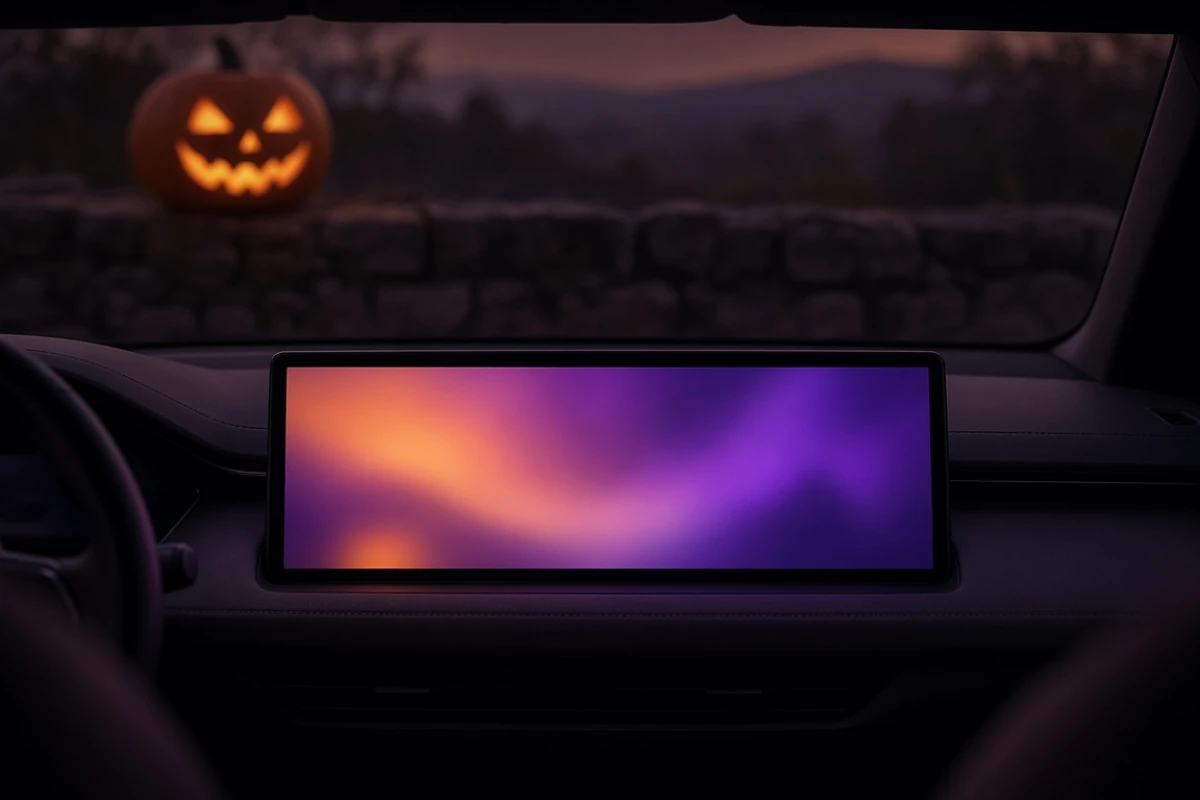
This October it was Halloween Mode. Tesla’s note promised a “Ghost Costume” for the car on the screen, spooky sounds and flickering lights when visitors approach, and a “haunting light show.” It came free, over the air. Honestly, it was really cool. I liked it for a simple reason: it was fun.
That screen is the same one I play games on when the truck is parked, which I wrote about in The Console Will Vanish. The Controller Won’t. It’s the same piece of glass. It just keeps getting new things to show.
So Tesla sells the truck. Then it sells, or gives, what the truck can do. The second part is where it keeps getting better.
Quick answers
How much is Tesla Full Self-Driving (Supervised) now?
In the U.S., Full Self-Driving (Supervised) is a $99 a month subscription. Tesla says it is not available as an outright purchase anymore.
Is buying Full Self-Driving (Supervised) outright better than the subscription?
In my view, yes, and that’s just my view, not advice. I paid $8,000 once. That’s about 81 months of $99, almost seven years. But you can’t choose it now. Tesla stopped selling it outright in the U.S. after February 14, 2026.
What companies use the razor and blades model?
Printer makers like HP, which has said it loses money on printers and makes its money on supplies like ink. Electric toothbrushes, where the handle stays and the heads keep coming. And cars that keep selling software after the car is sold.
What does this mean for a one-person business?
Everything, for me.
I already wrote about the three ways to make money, and selling something of your own was one of them. This is the part that comes after the first sale.
A service that ends after one sale pays you once. Then you’re back at zero, looking for the next customer. When people keep using what you made, and keep paying for it, that’s how a one-person business builds passive income. For someone running things alone, I think that matters a lot.
But my printer taught me the other half. If the second sale only feels like a toll, people pay it and grumble. If it makes the first thing better, people are glad to pay it. That’s the gap between my ink and my truck.
So that’s the rule I’m keeping for my own work. Sell the thing. Then keep making what it does worth paying for again.